The Accident You Prevent May Be the One That Never Gets Reported
Someone almost got hurt yesterday.
You probably don't know about it.
Not because your crew doesn't care.
Not because your safety culture is broken.
But because reporting what almost happened is often harder than saying nothing.
A near-miss happens at 2:17 in the afternoon.
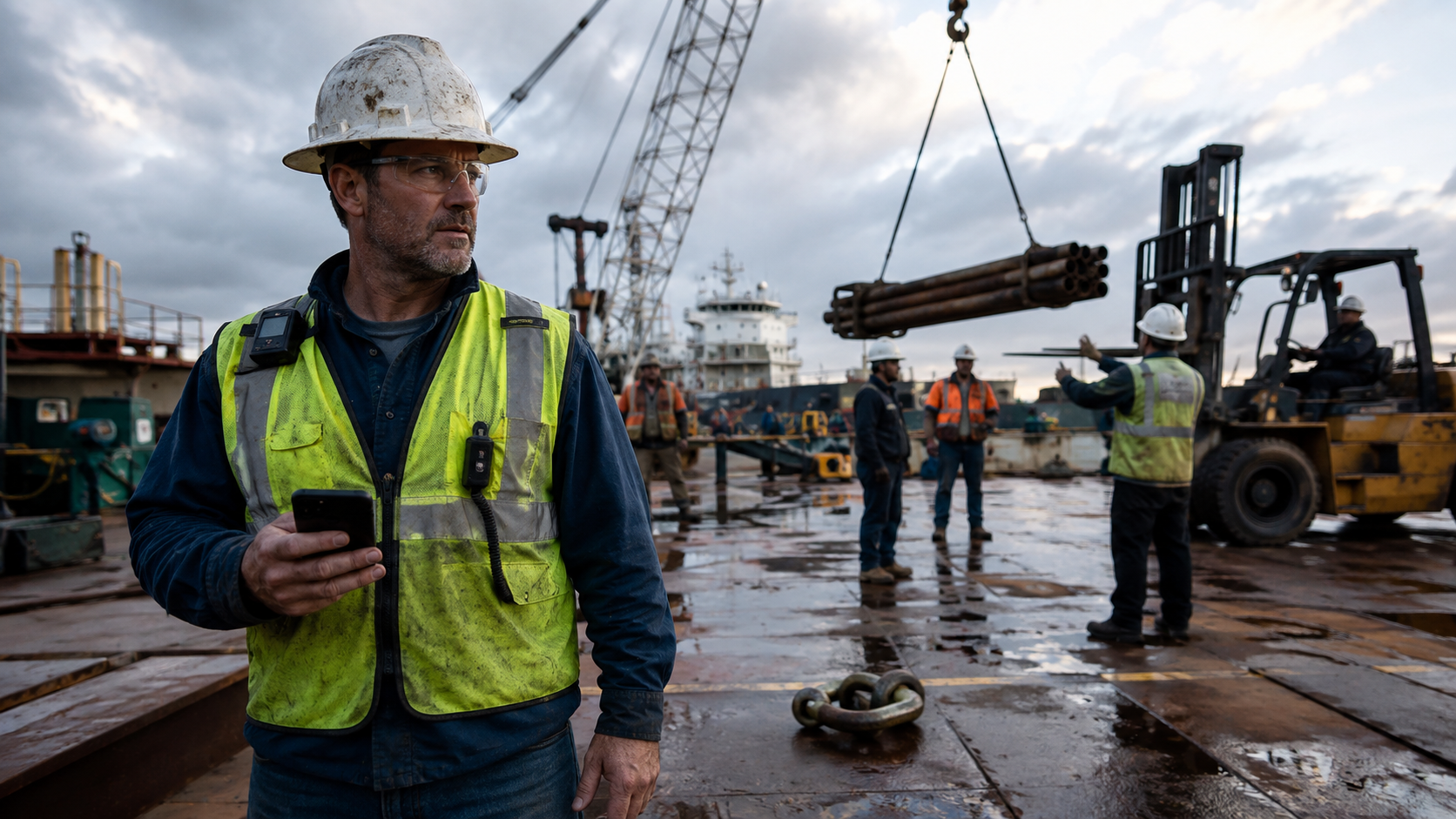
A shackle slips.
A load swings.
A forklift backs into the wrong lane.
A hand is almost where it should not be.
Everyone sees it.
Everyone reacts.
Then the job keeps moving.
By the time the crew gets back to the yard after a twelve-hour shift, the moment is already fading.
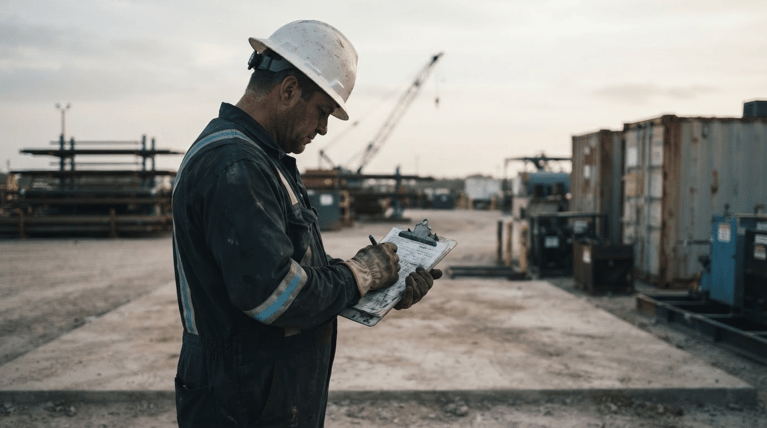
Someone is supposed to find a paper form.
Fill it out.
Hand it to a foreman.
The foreman hands it to a superintendent.
The superintendent emails it to safety.
Maybe the detail makes it all the way through.
Maybe it doesn't.
Sometimes the form never gets filled out at all.
That is not a people problem.
It is a friction problem.
And when the reporting process creates more resistance than the event itself, silence wins.
This happens on marine vessels, in fabrication shops, along pipeline right-of-ways, inside industrial facilities, and on job sites everywhere.
The near-miss happens in seconds.
The reporting process takes minutes, hours, or days.
That gap matters.
Because near-misses are not paperwork.
They are early-warning data.
They are the weak signal before the strong one.
They are the recurring condition that explains the accident three months from now.
The same blind corner.
The same piece of equipment.
The same shift.
The same handoff.
The same rushed decision.
The same bad habit nobody knew was repeating.
When those moments are not captured, the business loses the chance to see the pattern before someone gets hurt.
That is the real cost of an unreported near-miss.
The problem is not that the incident did not happen.
The problem is that the warning disappeared.
The fix does not need to be complicated.
It starts by removing friction between the moment something almost happens and the moment it gets captured.
Imagine this instead:
A crew member pulls out his phone.
He taps a link or scans a QR code.
He selects the location.
Chooses the type of near-miss.
Adds a short description.
Takes a photo if needed.
Hits submit.
Less than sixty seconds.
No clipboard.
No paper trail.
No waiting until the end of the shift.
From there, the information moves automatically.
The right supervisor is notified.
The safety team sees it.
The event is logged.
Similar incidents can be grouped.
Repeat locations can be flagged.
Recurring equipment issues can surface.
Patterns become visible while there is still time to do something about them.
That is where automation becomes valuable.
Not because it replaces judgment.
Because it helps good judgment happen sooner.
The business impact compounds.
Fewer incidents can mean less downtime.
Stronger insurance positioning.
Lower experience modification rates.
Cleaner safety records.
Better customer confidence.
And, most importantly, a workforce that sees proof that reporting something actually leads to action.
That matters.
Because crews stop reporting when they believe nothing happens after they speak up.
A fast reporting system is only half the solution.
The other half is closing the loop.
When someone reports a near-miss, they should be able to see that it was reviewed, addressed, and learned from.
That is how reporting becomes part of the culture instead of another form.
Try this:
Picture the best hand on your crew.
Something almost went wrong this week.
He saw it.
He thought about it.
Then he let it go.
What would it take for him to report that near-miss in under sixty seconds, exactly where he is standing, without finding a clipboard, calling the office, or waiting until the end of the day?
If the answer is "more than it should," you may be missing the most valuable safety data in your company.
By Ross Armstrong
Co-Founder, Pillar Optimization Partners
Pillar helps industrial contractors, marine operators, construction companies, and manufacturers gain operational control by connecting finance, operations, and technology into intelligent business systems that reduce risk, improve profitability, and make companies easier to run.
.jpg?width=767&name=iStock-1468633104%20(1).jpg)